
Your nervous system, not just the sore spot.
Physiotherapy that works with the system that keeps your symptoms going.

Regulate · Reconnect · ReCentre
Your body, your story, and the nervous system that connects them.
For pain, tension and exhaustion that hasn’t shifted, with or without a diagnosis.
No referral neededMedicare rebates with a GP planNDIS (self- and plan-managed)Health fund rebates may applyFees & funding →
Does this sound like you?
Often, a sore back, stiff neck or headaches that won’t quit are the tip of the iceberg: a nervous system that’s been carrying too much, for too long.
You’re not imagining it, and you don’t have to white-knuckle your way through the next flare-up.
Take the self-check3 minutesYou might recognise yourself here:
How it works
You don’t need to be in the same room for body-based work to happen. I guide you through each step, in your own space.
A 60-minute video assessment. I listen first, and you share only what feels right.
Together, we work out how your nervous system might be contributing to what you’re feeling.
A few minutes, little and often. Practices that work with your body, not against it.
The ReCentre difference
Physiotherapy that works with the system that keeps your symptoms going.
Your symptoms are taken seriously. You share only what feels right, from the comfort of home.
Like a path worn through grass, a few minutes a day becomes the new way your body knows.
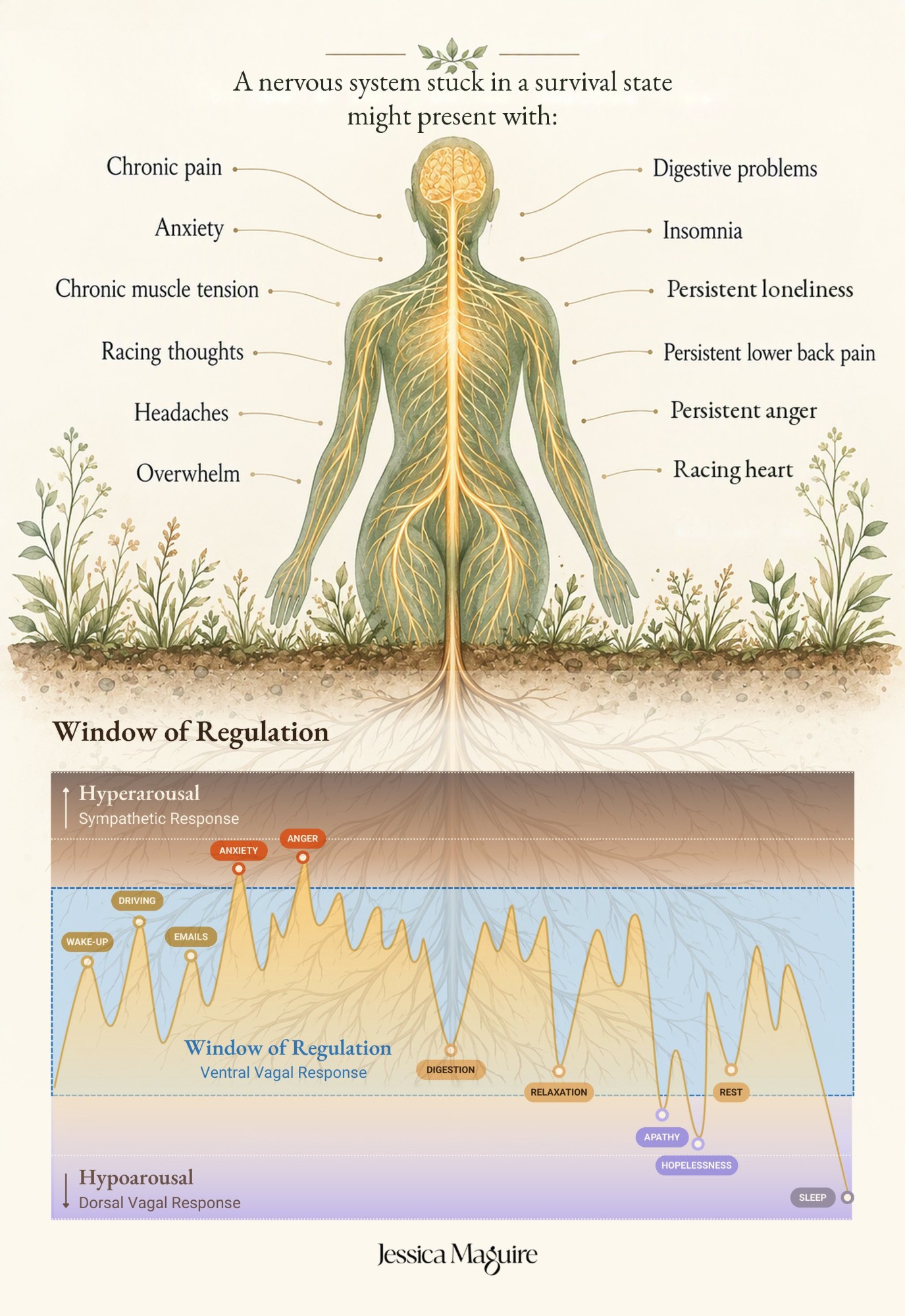
Window of Regulation graph: Jessica Maguire, Nervous System School. Used with permission.
Looking beneath the symptoms
Your nervous system has one job above all others: keeping you safe. When life has asked a lot of you, it can get stuck on high alert, and you feel it as pain, tension, fatigue and broken sleep. This work looks beneath the symptoms, helping your protective system learn it can stand down.
You’ve read the books, done the research, maybe worked through it in therapy, and that understanding matters. But knowing WHY lives in the thinking brain. Pain, tension and exhaustion are driven by the deeper, automatic parts of your nervous system, the parts that don’t respond to reasoning alone.
That’s where I work: step by step, building enough safety in your body that it can let go, and your life can get bigger again.
Want the science behind this? Read: More than “just relaxing” →
It’s not about being calm all the time
A healthy nervous system isn't calm all the time. It's flexible: it can rise to meet a challenge, then find its way back down again. That's what regulation really means.
If yours has been stuck on guard, it isn't broken. It's been protecting you. Building more flexibility in your nervous system can help you:
You can't think your way to safety, but you can sense your way there, gently and at your own pace.
Read more about why this matters →Meet your physiotherapist
Physiotherapist since 2007
Finding my own way through burnout taught me what actually helps, and it’s at the heart of how I work now.
Read my story →
Physiotherapist · Founder, ReCentre Physio
Ready to ReCentre?

No pretending you’re fine. No pushing through. I listen first, and we go at the pace that feels right for you.
Your first session is 60 minutes by video, from wherever you feel comfortable.
Medicare, NDIS and health fund options — see Services & Fees.